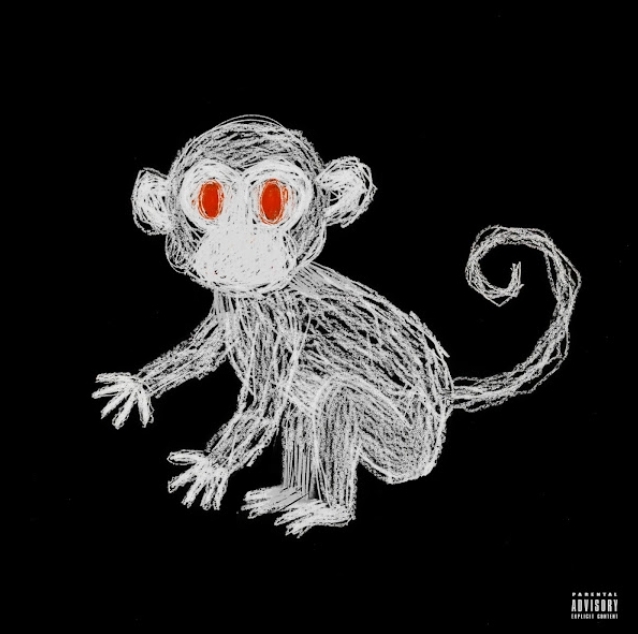
There is a particular kind of artist who does not simply release music — they release versions of themselves. Black Sherif has always been that kind of artist. And with PopStar by Black Sherif, he has released perhaps his most honest version yet.
The single dropped on March 27, 2026, and within hours it had flooded timelines, dominated West African and UK charts, and broken records for Ghanaian releases in the early part of this year. But numbers, as useful as they are, do not tell you why this song matters. The charts confirm its reach. The music explains its gravity.
Welcome to the Sunrise
Black Sherif — born Mohammed Ismail Sherif in Konongo, Ghana — rolled out this single with a phrase that has since become something of a rallying cry among his devoted following: “Welcome to the Sunrise.” It is not marketing language. It is a declaration. He has described this project as a reset, a reclaiming — the moment a 24-year-old who grew up dreaming of stages stops performing the version of himself the industry expects and starts performing the one he always intended to be.
He said it plainly in an interview with OkayAfrica: “I seek to reclaim the artist and entertainer that I long sought to be before I moved to the city, which then compelled me to be what I had to be.”
Read that sentence twice. It is a lot to carry. And it is exactly what he carries into this record.
The Production: Warm, Patient, Precise
Joker Nharnah — the producer who has been Black Sherif’s most trusted sonic partner through The Villain I Never Was, Second Sermon, Kwaku The Traveller, and the landmark 2025 album Iron Boy — is once again behind the boards here, and the result is a masterclass in knowing when to hold back.
The foundation of PopStar by Black Sherif is deliberately unhurried. Trap drums sit beneath a loose Afrobeats swing, kept warm rather than clinical. A minimalist guitar loop breathes through the midrange — not insistent, just present, like a quiet reminder running underneath a conversation. The bassline is grounded and deliberate, and the 808s, rather than punching for effect, create atmosphere. There is no single moment in this production designed to go viral. Every moment is designed to last.
What Joker Nharnah understands — and this is the mark of a producer who has genuinely grown alongside his artist — is that Blacko’s voice does not need much to be enormous. Space is not empty here. Space is load-bearing. It is where the listener sits and feels the weight of what is being said before the next line arrives.
The result is what critics have called a Soulful Highlife-Drill fusion: gritty enough to carry the streets of Konongo Zongo, polished enough to hold its own in any room in the world. It is the sound of an artist who no longer needs to choose between his roots and his ambition, because Joker Nharnah has found a way to make them the same thing.
The Lyrics: Fame Without the Filter
There is a famous trap in music about success — the part where artists, having arrived, begin singing the praises of arrival without ever acknowledging the cost of the journey or the strangeness of standing at the top. PopStar by Black Sherif refuses that trap entirely.
The chorus is deceptively simple: “Hol’on I’m a PopStar / You know say I’m a PopStar / The most high na my style / Can’t you see the lifestyle.” On the surface, it sounds like a confident declaration. And it is. But it is the verse that recontextualises everything: “From the mud boys, no handouts / Serious and poised, no self-doubts / Dangerous choices but I’m in love with time.”
That last line — dangerous choices but I’m in love with time — is one of the most quietly brilliant things he has written. It acknowledges that the road to this point was not clean, that some choices carried real risk, and that what has made it bearable is not certainty but a deep trust in the process of time itself. It is a 24-year-old speaking with the earned philosophy of someone twice his age.
He switches between English, Twi, and Pidgin across the track, as he always does, and each language shift carries its own emotional register. The Twi passages ground the song in the Ghanaian specificity that his international audience has always found compelling — this is not music made palatable for foreign markets. It is music made true to its origin and trusted to travel on that basis. It always does.
The Voice: Seasoned, Restrained, Devastating
Black Sherif’s vocal delivery on this track is a study in restraint. He does not oversell a single line. He does not reach for notes he does not need. His voice — textured, volcanic when required, and capable of enormous tenderness — is deployed here with the economy of someone who has learnt that less is more not as a stylistic choice, but as a philosophical conviction.
There is a section in the bridge where he slips into a more conversational register, almost like he is talking directly to a specific person rather than a listening audience. Those moments are where the song truly lives. He sounds like someone who has sat with these words for a long time before finally saying them out loud. That quality — the sense that the listener is hearing something private — is impossible to manufacture and immediately distinguishable when it is real.
His ability to move between singing and rapping without the transition feeling like a gear shift is increasingly becoming one of his signature strengths. Both modes feel native to him, and both feel essential to this song.
Why This Is a Generational Statement
PopStar arrives on the heels of Iron Boy, an album that saw Black Sherif sell out venues across North America and Europe and cement himself as one of the most important African voices of his generation. The face of Ghana’s 2026 Black Stars World Cup kits. The first African artist to headline the Red Bull Symphonic. A Grammy-nominated artist at 24 who could, at any point, choose the comfortable path of accessible global pop.
He keeps not doing that. And PopStar is the most direct explanation yet of why.
This song is about what it actually costs to become the version of yourself the world wants to celebrate — and about the decision to shed that performance and return to something more real. In doing so, PopStar by Black Sherif functions simultaneously as a personal manifesto and a cultural touchstone. It tells every young person from a place like Konongo Zongo that you do not have to abandon who you are to go where you want to go. You carry it with you. You let it lead.
That message, wrapped in some of the most atmospheric and emotionally precise production of his career, is what makes this more than a great single. It is a statement about the kind of artist he intends to be for the long haul — and if PopStar is the opening chapter of whatever comes next, the rest of 2026 is going to be extraordinary.
Stream PopStar by Black Sherif now. This one was built to stay.
Listen below: